
Over the past year, I’ve been focusing on one major category: learning and making T-shirts and shirts. It’s been a lot of trial and error—but definitely fun. As usual, I started with research before drafting any patterns. I then tested the patterns on muslin fabric before moving on to the final materials, followed by adjustments to improve fit and finish.
Project 003–004: T-Shirts
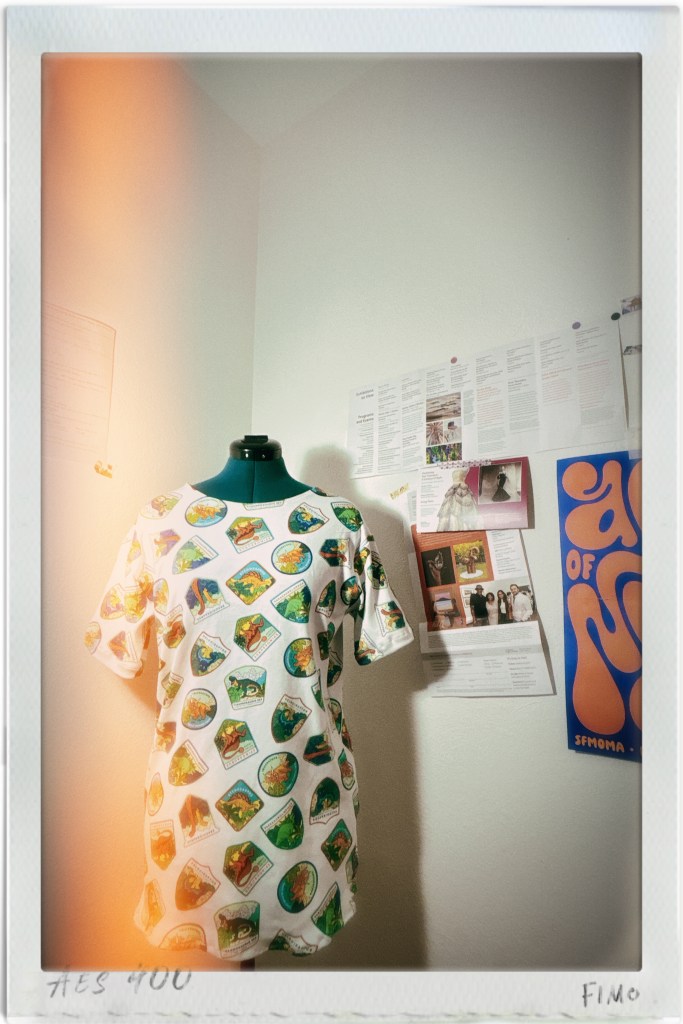
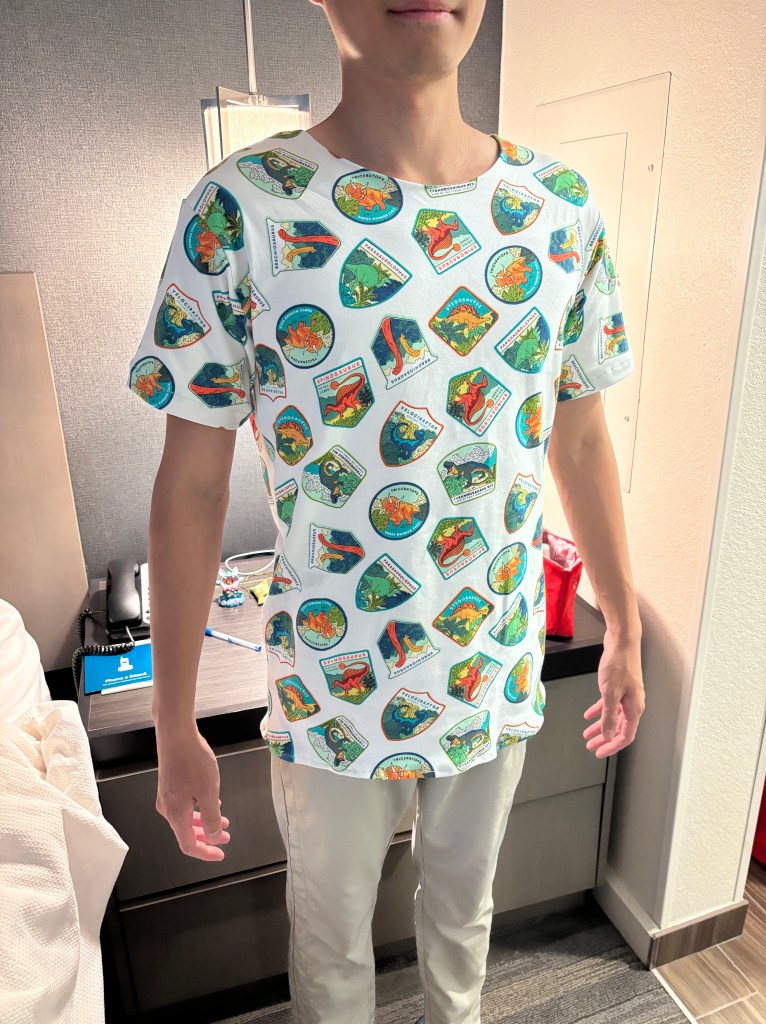
I first came up with the idea of making a T-shirt because it’s a relatively easier project compared to a shirt. For my first attempt, I made one for my boyfriend using a fabric with his favorite animal—dinosaurs! I got this deal for less than $10 at Joann Fabrics. The fabric is breathable, soft, and stretchy, making it perfect for indoor or lounge wear. It’s actually a high-quality material usually used for children’s clothing.
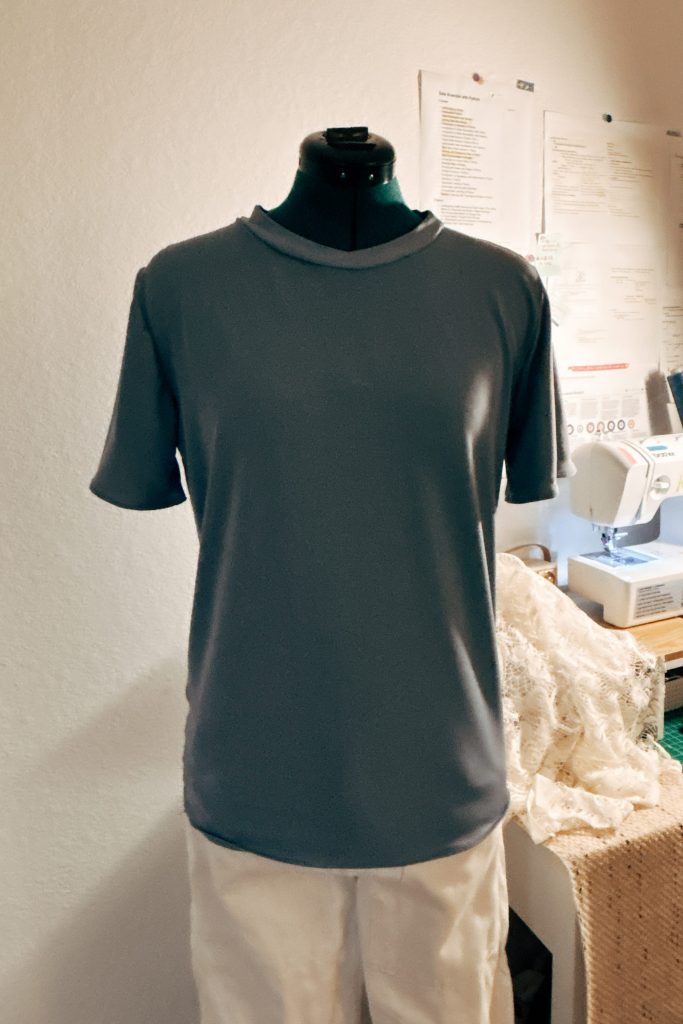
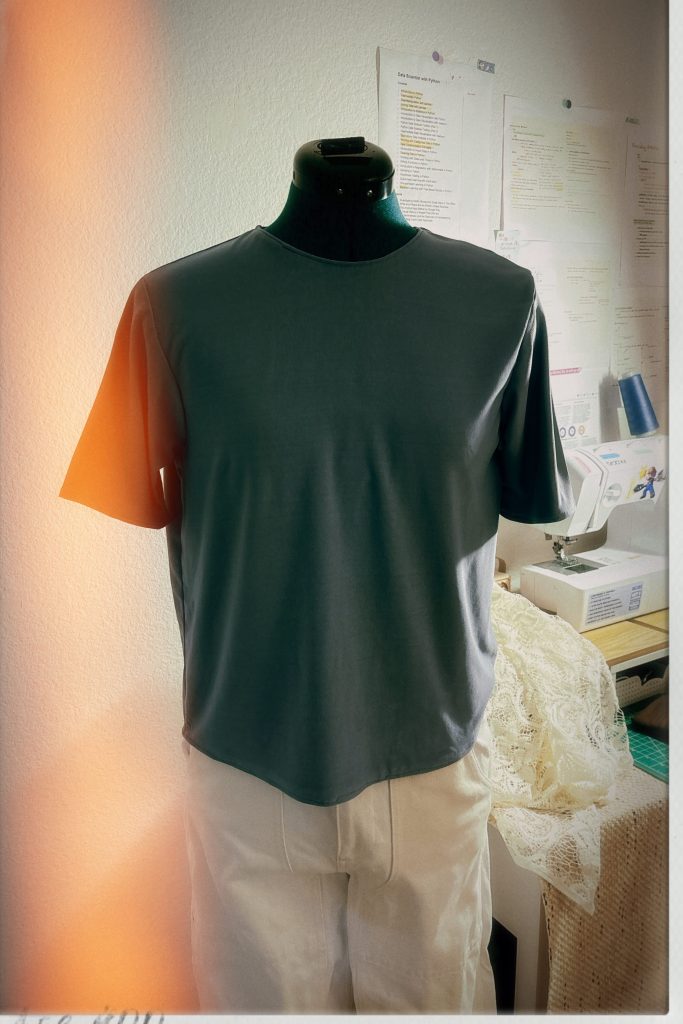
For the second T-shirt project, I chose an athletic fabric in a color somewhere between light blue and navy blue. Both T-shirts were made using a single type of fabric throughout the whole process.
Pattern Making (T-Shirts)
T-shirt patterns typically consist of four pieces: one front, one back, and two sleeves—this is the basic version. More detailed versions might include additional elements like a collar or neckband. Some of the free resources I used to find patterns and tutorials include Xiaohongshu and YouTube.
Here’s one of the YouTube videos I learned from:
How to Draft a Shirt Pattern … and Fix Fit Issues (By Cornelius Quiring)
Sewing & Final Products
After cutting the fabric based on the pattern and piecing everything together, the final results looked like this:
- Project 003 – Dino T-Shirt
- Project 004 – Men’s & Women’s T-Shirts
Project 005: Button-Up Shirt
This was a more complex and exciting project. It gave me the chance to work with interfacing fabric and learn how to sew buttons. Compared to the 4-piece T-shirt, this shirt involved around 18 pattern pieces—so it definitely required more patience and attention to detail.
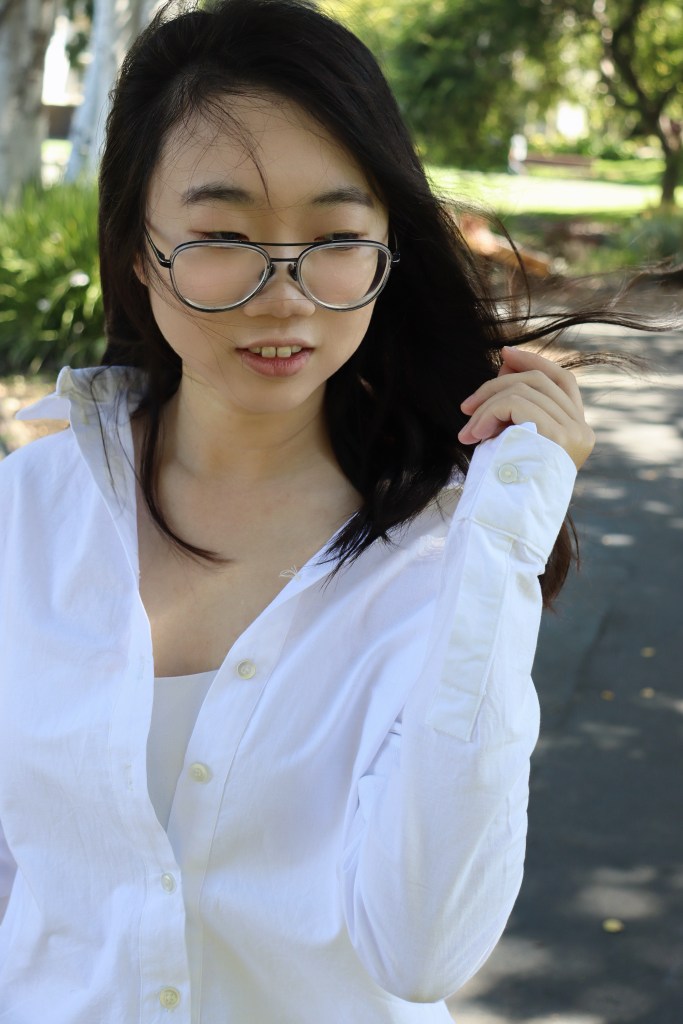
The fabric I used was a white cotton, not too sheer, purchased from either Joann or a local discount fabric store in San Francisco. It’s not stretchy and tends to wrinkle easily, which is typical for cotton shirts.
Pattern Making (Shirt)
As mentioned, this shirt involved around 18 pieces (not including the interfacing). In addition to the usual front, back, and sleeves, I also included components like the yoke (for the upper back), cuffs, and collar.
This time, I learned how to use my Brother sewing machine to make buttonholes smoothly. Since it was my first time sewing a shirt from scratch, I started with a sample using muslin fabric. After adjusting the pattern for a better fit, I moved on to the final version.
Before assembly:

Helpful YouTube links I used:
How to sew buttonholes using your sewing machine! @JessicaShaw
(Tip: You can also search “sewing buttonholes + [your sewing machine model]” for more customized tutorials.)
How to Make a Button Up Shirt From Scratch (by Cornelius Quiring)
Sewing & Final Product
After finishing the sample shirt and confirming the fit, I cut the real fabric and sewed the final version.
A funny story: when I went to buy buttons, I visited a store called Always Quilting on a Monday around noon. It turned out the store was closed that day, but after I knocked several times, a lady kindly opened the door. She asked what I was looking for and handed me a whole bucket of buttons to sort through. I didn’t know exactly what size I needed—just that I wanted 12 small white buttons. She told me to take a bag home to test them out and didn’t charge me, saying I was just borrowing them. She was such a kind and quirky person—and thanks to her generosity, I was able to complete my shirt.
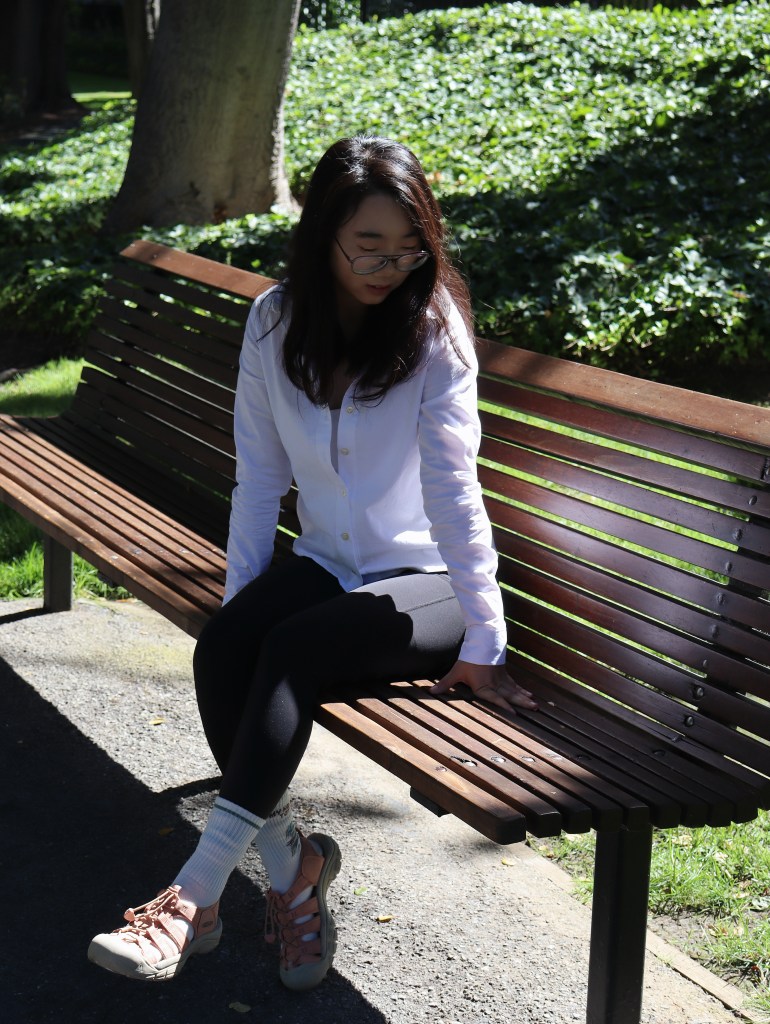
- Project 005 – Button-Up Shirt

I hope my story inspires or helps you explore your own T-shirt or shirt projects. Happy sewing!

 Aurora's Fashion and Lifestyle